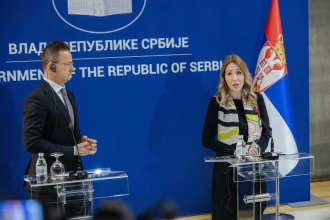
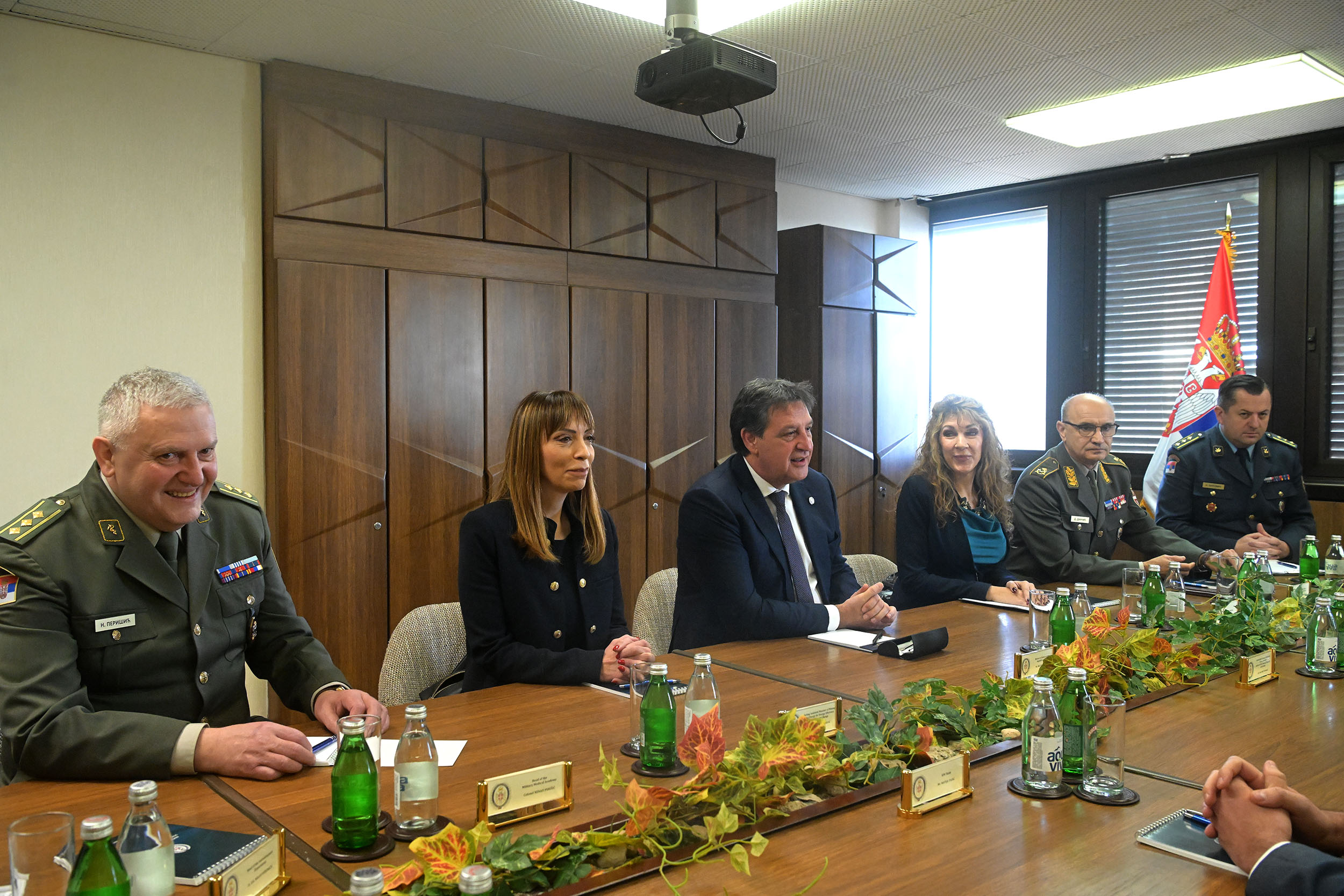
A meeting regarding the implementation of the project Greening the Public Sector – Rehabilitation of the Military Medical Academy (VMA) Hospital was held today at the Military Medical Academy.

Project Greening the Public Sector – Rehabilitation of the Military Medical Academy (VMA) Hospital
18 December 2025
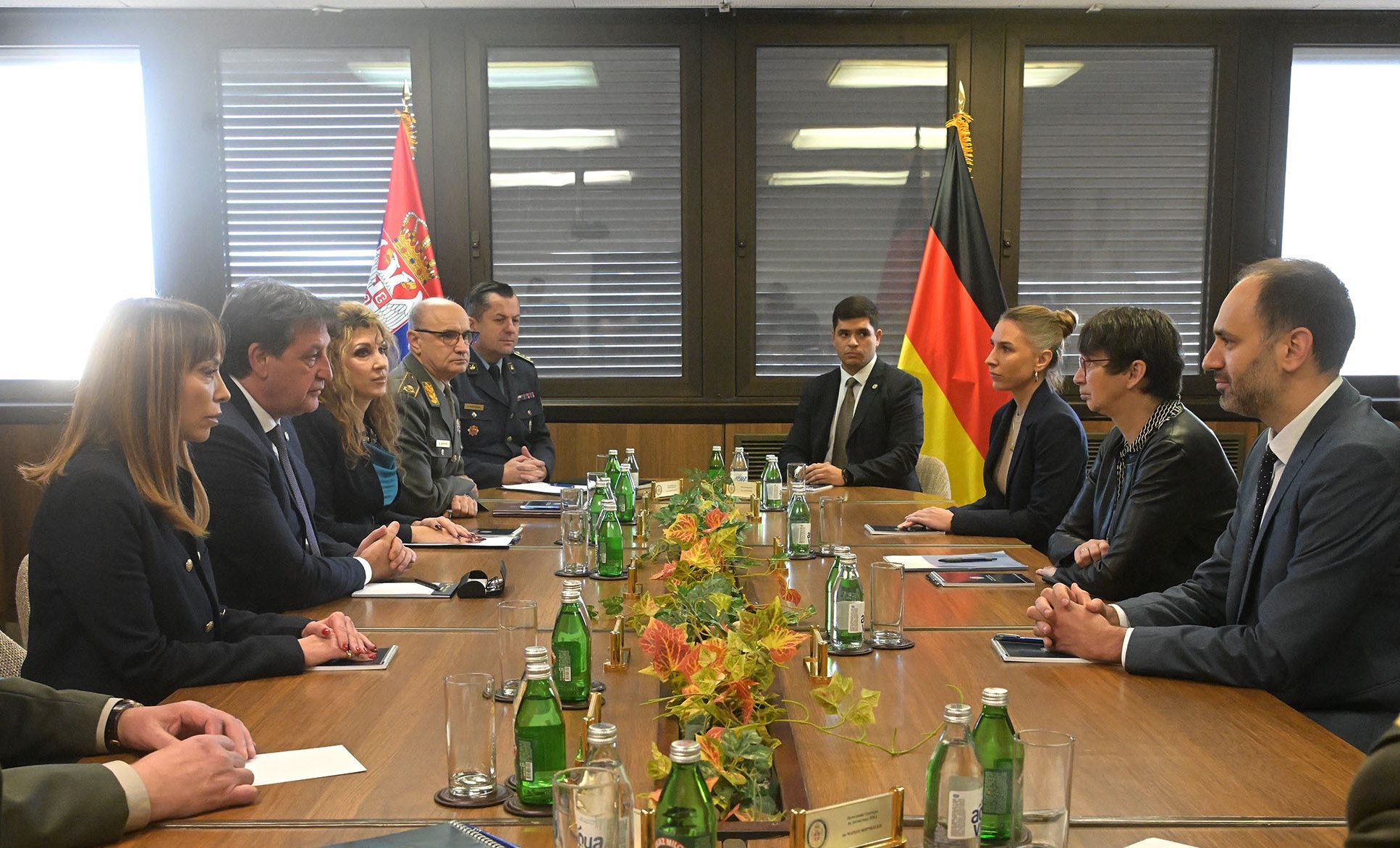
On that occasion, Minister of Defence Bratislav Gašić announced a significant step forward in improving energy efficiency and sustainable resource management within the military healthcare system.
He emphasized that the project is financed within the framework of bilateral cooperation between the Republic of Serbia and the Federal Republic of Germany, based on an agreement between the two governments.
“The objective of the project concerning the VMA is to reduce energy consumption and increase the use of renewable energy sources through the preservation and protection of the environment. The project is being implemented in coordination with the German Development Bank and the Ministry of Mining and Energy, which is the project implementing authority. I would like to recall the role of the Military Medical Academy as one of the most important facilities within the healthcare system of the Ministry of Defence and the Republic of Serbia, which also provides medical services to citizens of countries across the region. This was recently confirmed by the engagement of VMA doctors and medical staff in treating those injured in the fire in North Macedonia,” said Minister Gašić, adding that the building was officially put into use on 1 January 1981 and was considered one of the largest and most modern hospital facilities in Europe at the time.
Minister Gašić recalled that the VMA building was designed as a functional whole, with clearly defined medical, diagnostic, research, and logistical facilities, representing a top achievement in hospital architecture at the time.
“The Military Medical Academy is one of the largest tertiary-level military hospitals in Southeast Europe, where a medical board for any type of intervention can be convened under one roof within 10 minutes. It comprises 26 clinics, 25 operating theatres, 11 institutes, as well as the National Poison Control Centre—the only specialized institution in the country for the treatment of acute poisoning. Although primarily intended for the treatment of military beneficiaries, following the signing of a contract with the Health Insurance Fund of the Republic of Serbia in 2008, the VMA was integrated into the national healthcare system, and its Emergency Centre serves as the designated on-duty emergency service every Wednesday for all citizens of Belgrade and throughout Serbia,” the Minister of Defence emphasized.
On that occasion, Minister Gašić noted that the building has approximately 180,000 square meters of usable space, around 6,000 rooms, and 38,000 lighting fixtures, with installed thermal capacity equivalent to heating 8,000 two-bedroom apartments, and an average monthly electricity consumption comparable to that of a settlement with 20,000 inhabitants.
“For these reasons, we decided to work on improving the energy efficiency of the VMA in order to achieve energy savings through the use of renewable energy sources and contribute to the preservation and protection of the environment. The project entitled ‘Rehabilitation of the VMA Hospital,’ which has brought us together today, will result in a sustainable and significant reduction in the VMA’s energy consumption,” the Minister of Defence stressed, adding that he hopes the reductions will reach up to 40 percent in natural gas consumption and up to 30 percent in electricity consumption compared to current levels. This will lead to a reduction in greenhouse gas emissions and contribute to improved conditions within the hospital through energy efficiency measures.
Highlighting that the project will be implemented in three phases, Minister Gašić stated that the total estimated value of the project is EUR 211 million.
“It is planned for the first phase to begin in Q3 2026 and to include structural rehabilitation of the building, reconstruction of the roof on the lower part of the facility with increased thermal resistance, reconstruction of the domestic hot water system, utilizing waste heat via heat pumps, reconstruction of water supply connections, and other related works. We have been waiting for this project to enter the implementation stage for over seven years. I invite all major Serbian companies to participate in the tender,” said the Minister of Defence, adding that the Republic of Serbia and the Ministry of Defence have not relied solely on this project, but have undertaken a number of significant steps over the past two years to improve working conditions for members of the Ministry of Defence and the Military Medical Academy, as well as for all patients.
Speaking about plans for 2026, Minister Gašić announced a new project to be launched as early as the first month of the coming year, to be implemented with state support. He also noted that efforts are underway to ensure that by 30 June next year the VMA receives new cooling systems and that 1,200 beds are replaced with new hospital beds meeting international standards.
Regarding the implementation of the project, Minister of Mining and Energy Dubravka Djedović Handanović stated that the energy rehabilitation of the VMA hospital is, in terms of investment value, the single largest project in the field of energy efficiency, as well as a project with a significant impact on energy savings.
“Built more than 40 years ago, the Military Medical Academy today consumes about three times as much electricity and gas as a hospital of similar size in Germany. The measures to be implemented in the first phase of rehabilitation will enable annual energy savings of at least 35 percent, with a corresponding reduction in carbon dioxide emissions, and will extend the hospital’s lifespan by at least 30 years. By comparison, the rehabilitation of the VMA will achieve savings equivalent to those resulting from the energy rehabilitation of 150 public buildings with an average area of 1,500 square meters, or to the amount of energy produced over an entire year by a 25-megawatt hydropower plant,” said Djedović Handanović.
The Ambassador of the Federal Republic of Germany, Anke Konrad, emphasized that the VMA is the largest medical institution in Serbia and one of the largest in Europe, noting that one of the main objectives of the project is to reduce the consumption of gas, water, and electricity. She underlined that the project is supported by the German Development Bank in the amount of EUR 50 million, as well as an additional EUR 5 million from the European Union.
“This tender is being published under the procedure of an international competitive tender and offers a broad range of contractual opportunities under internationally recognized contractual conditions. Importantly, procurement is also conducted in accordance with the standards of the German Development Bank, ensuring transparency throughout the entire project,” Ambassador Konrad said.
.webp)