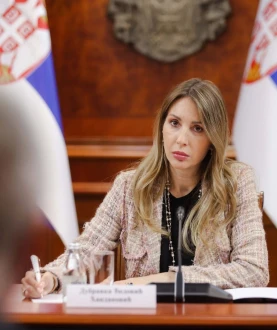
Minister of Mining and Energy Dubravka Djedović Handanović stated today that, for the third year in a row, Serbia has been the leader within the Energy Community in aligning with EU regulations, and to date remains the only Contracting Party of the organization to have fulfilled the requirements for coupling with the European Union electricity market.
Djedović Handanović: Serbia a Leader in Energy Community Reforms for the Third Consecutive Year
18 December 2025
Speaking on the occasion of the publication of the 2025 Annual Implementation Report by the Energy Community Secretariat, the Minister said that Serbia is the first country in the Western Balkans to have aligned its legislative framework in the electricity sector.
“We have completed our task, which is also part of the Reform Agenda, namely the EU Growth Plan. This is the first time that a country which is not a member of the European Union has fulfilled the requirements to achieve electricity market coupling with the EU market, and a verification process conducted by European institutions is currently underway. As this is the first such case, additional time is required to establish the necessary procedures, given that this represents a pilot process. I hope that this process will be swift and efficient, because once it is completed, we will be able to proceed with market coupling with the EU electricity market, specifically with the Hungarian market as our first neighbour, with which we also share a common power exchange that includes Slovenia as well,” Djedović Handanović said.
She emphasized that being part of the EU energy market brings multiple benefits for Serbia. “These include faster electricity trading and exchanges, market sustainability, access to more competitive prices, as well as enhanced energy security, enabling us to respond more quickly in the event of certain challenges or supply disruptions in neighbouring countries,” Djedović Handanović said.
She recalled that a set of new laws in the fields of oil, gas and compulsory stocks was recently adopted, thereby continuing the process of alignment with EU regulations, and emphasized that Serbia will continue to increase its energy stocks.
“Over the past two years, we have significantly increased our compulsory oil and petroleum product stocks, which have reached the equivalent of 44 days of last year’s imports, while Eurodiesel stocks alone have been increased by 72 percent. Good preparedness and sufficient petroleum product stocks ensured that our citizens did not experience any shortages and provided us with additional security in the challenging situation we are facing as a result of the sanctions imposed on NIS,” Djedović Handanović said.
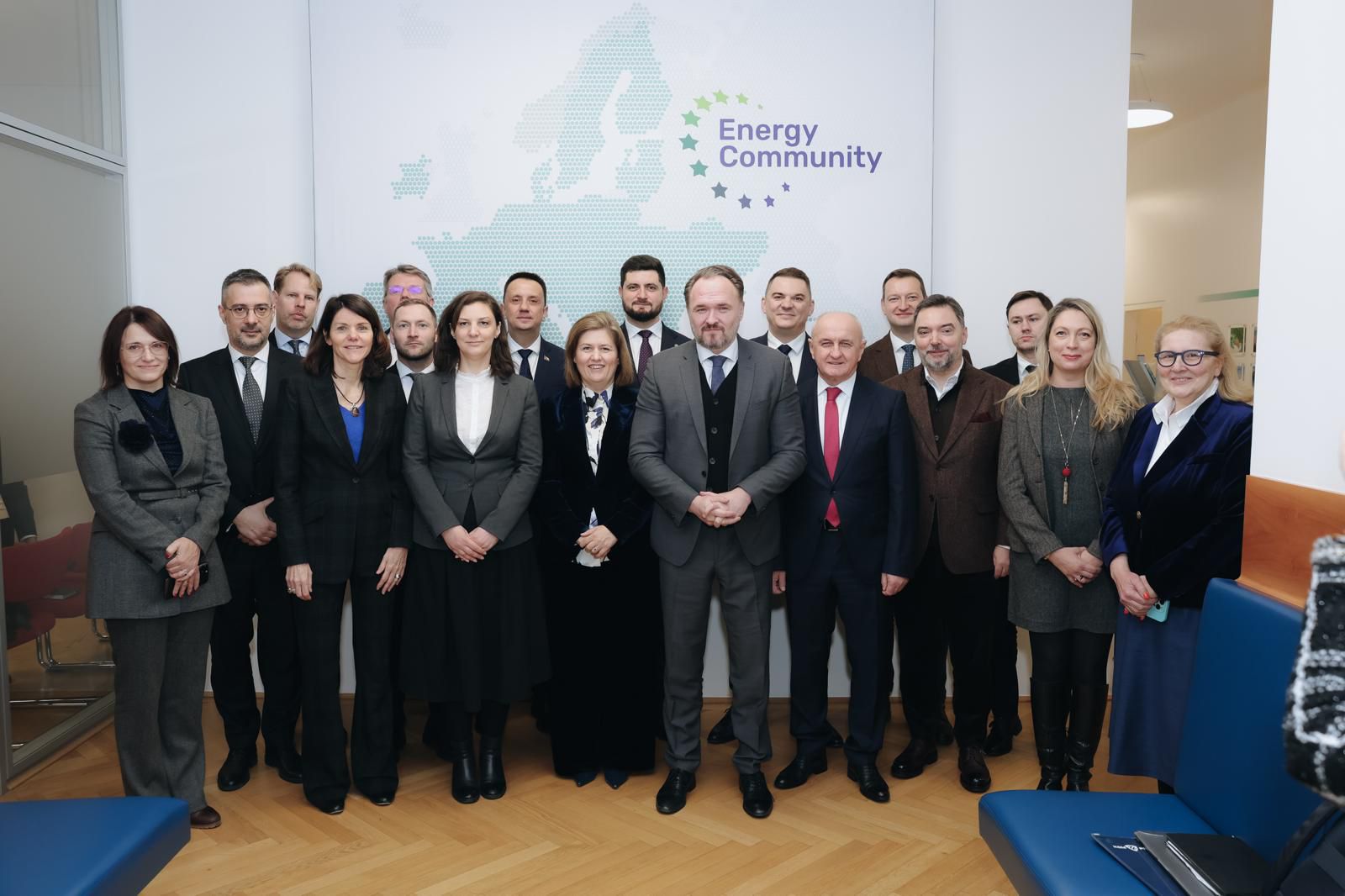
One of the main topics at today’s Energy Community Ministerial Council meeting in Vienna was the start of the implementation of the Carbon Border Adjustment Mechanism (CBAM). The European Commission has published a proposal for amendments to the CBAM Regulation, which is expected to undergo the EU institutional adoption process and enter into force as of early 2026.
“These changes also address a number of issues that Serbia has been raising over the past two years in order to ensure fairer rules for Serbian exporters to the EU. The methodology for calculating the emission factor for electricity generation has been amended so as to take into account the overall national generation mix, thereby reducing CBAM-related costs by approximately 40%. This change, together with several other proposed amendments, will also mitigate the negative impact of CBAM on investments in RES. Serbia is also in a particularly favourable position with regard to market coupling, and this progress enables the conclusion of a bilateral Memorandum of Understanding with the European Commission, which would define appropriate conditions and timelines for an exemption from the application of the CBAM mechanism, including progress in the implementation of carbon pricing instruments,” the Minister underlined.
Over the past year, Serbia has increased its average level of compliance across all areas assessed by the Report from 55 to 63 percent. This represents the best result in the Western Balkans region and the second-best overall, after Moldova, and is above the average of all Contracting Parties, which stands at 53 percent this year. Among the assessed areas, Serbia has achieved its strongest results in the field of decarbonisation, where it further improved its performance this year and, with a score of 83 percent, ranks as the leading Contracting Party within the Energy Community.
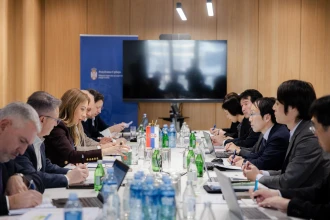
The Serbian delegation at the Energy Community Ministerial Council meeting in Vienna consisted of Jovana Joksimović, Assistant Minister of Mining and Energy for International Cooperation, European Integration and Project Management, and Radoš Popadić, Assistant Minister for the Electricity Sector.
.webp)